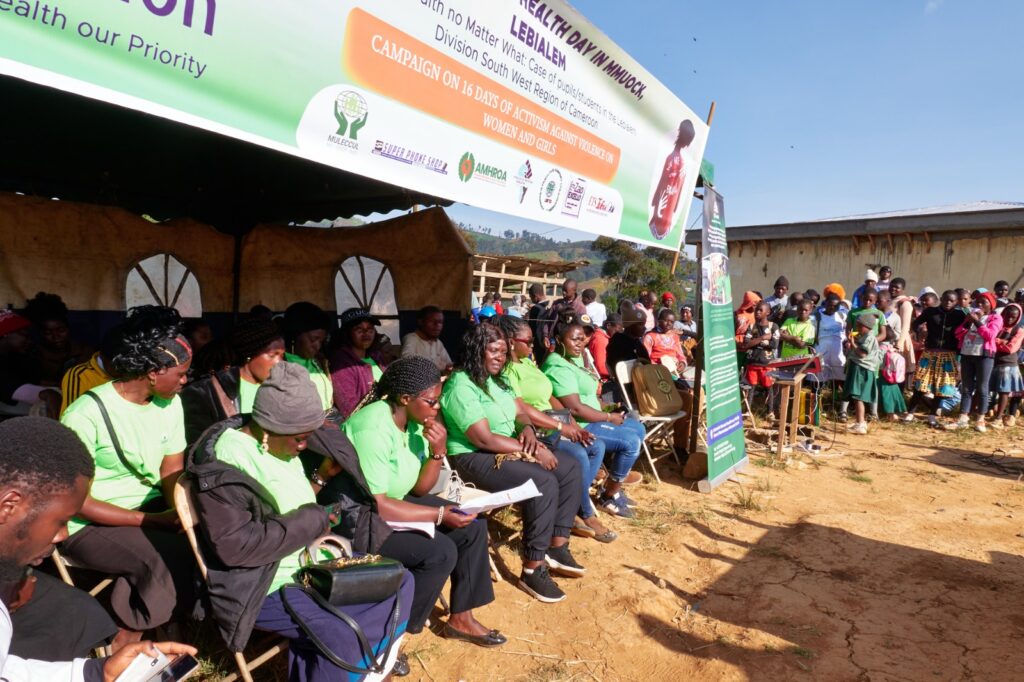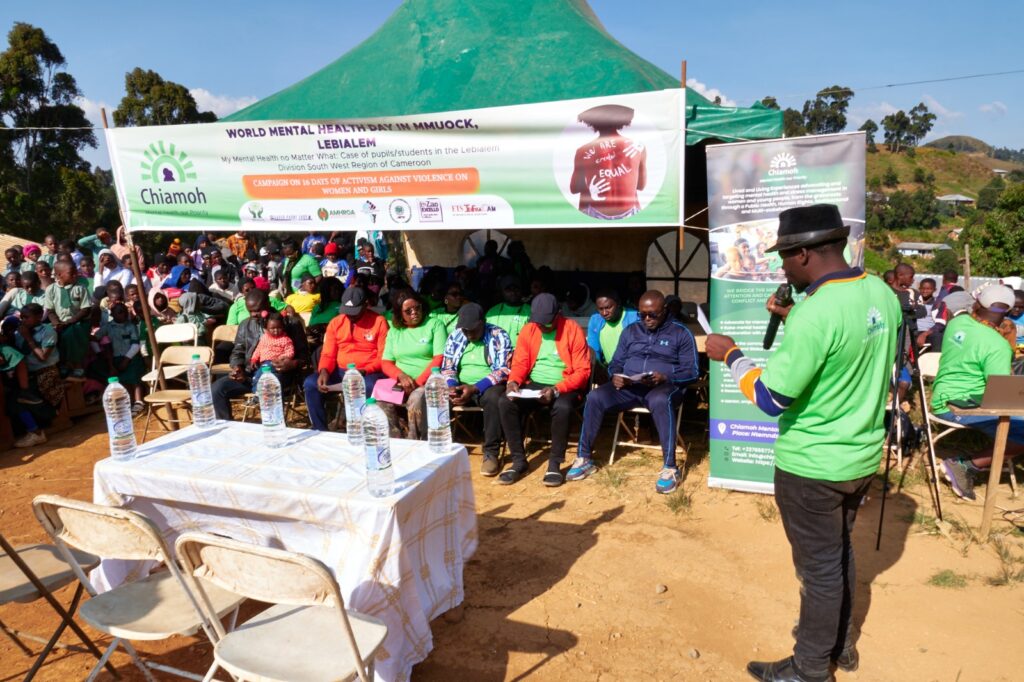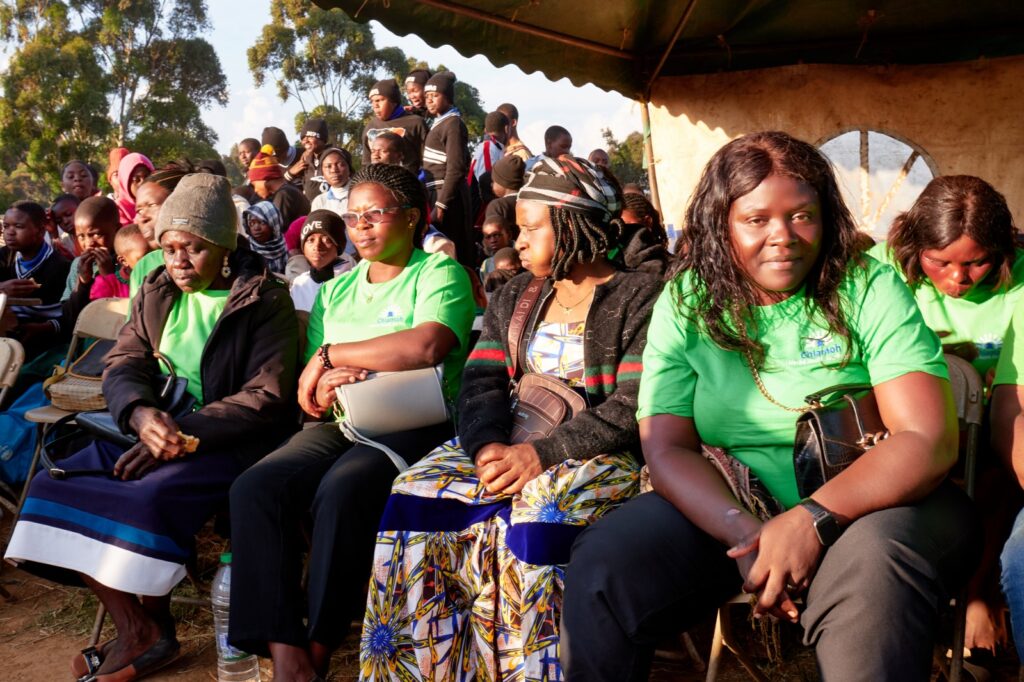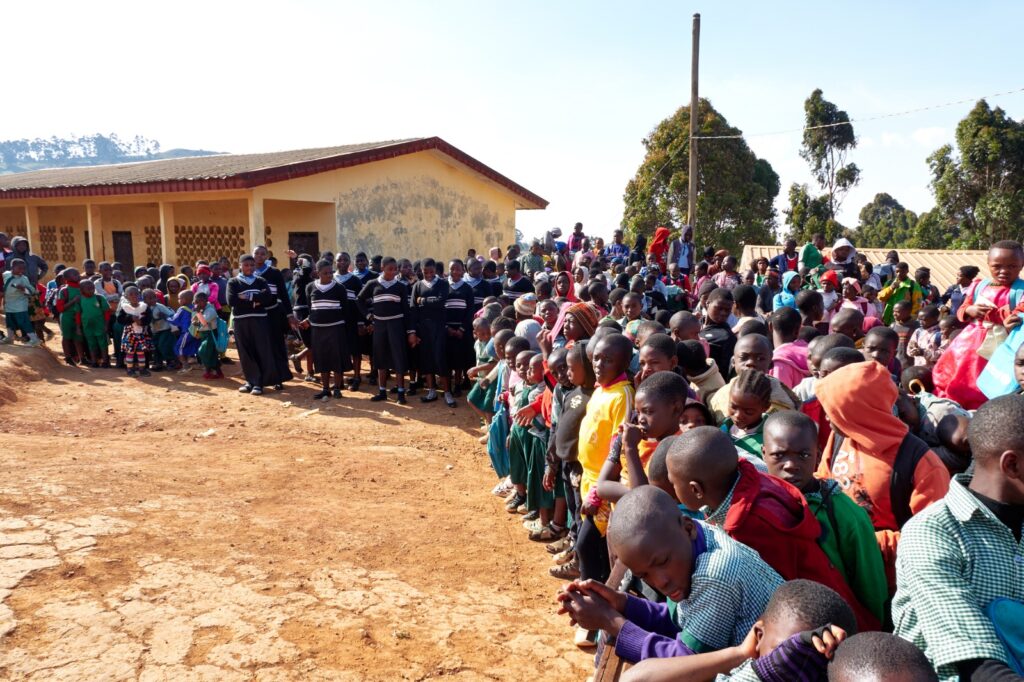
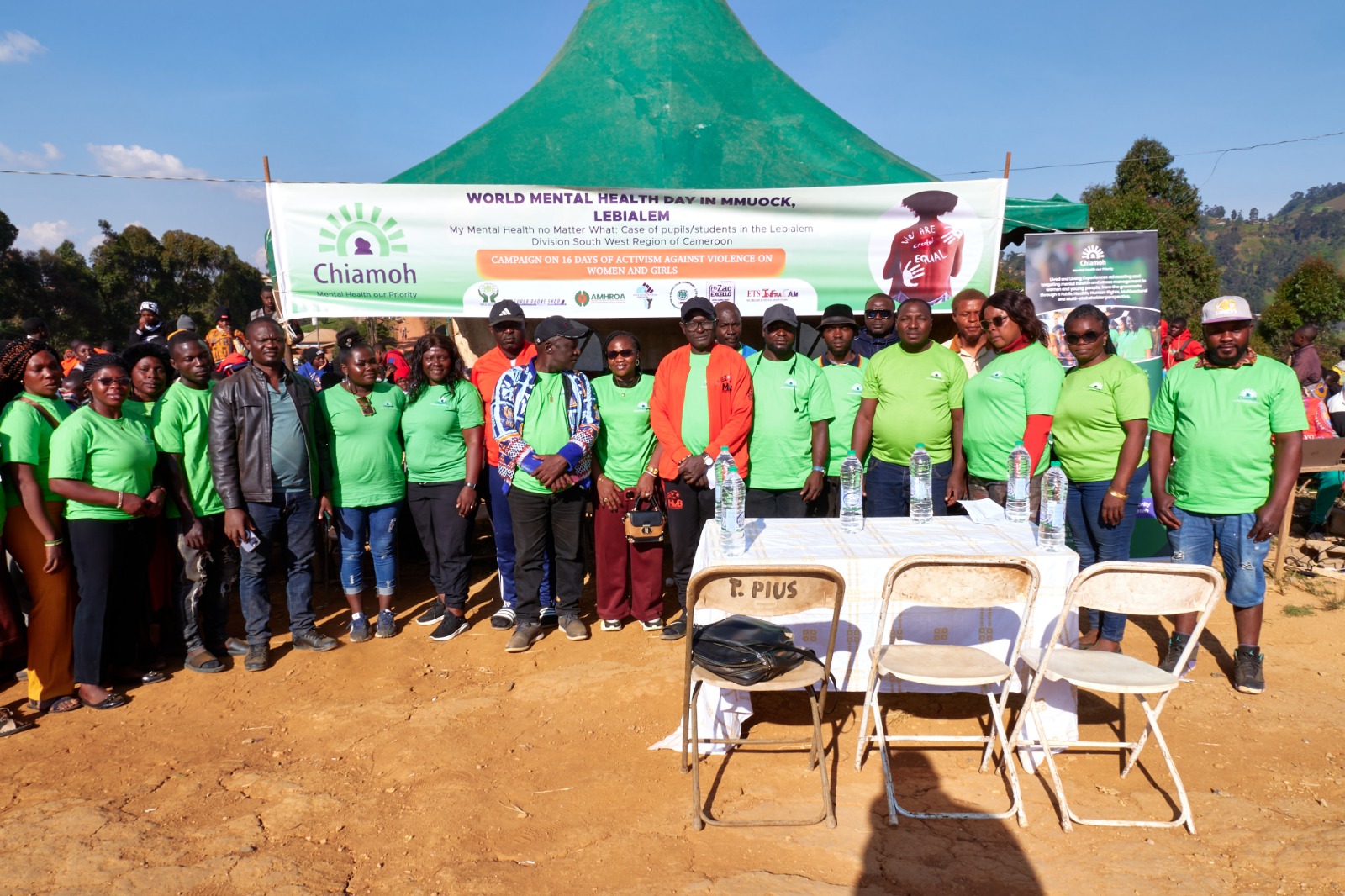
More than a thousand pupils and students from across the Lebialem Division gathered at CETIC Ntemndzem, Mmuock Leteh, Wabane Subdivision to mark World Mental Health Day 2025 and the 16 Days of Activism on Violence against Women and Girls.
The event, organised by CHIAMOH Mental Health Our Priority Association, drew learners from over ten schools, teachers, community leaders, and representatives of government services and the traditional of Mmuock Leteh, HRH Fotang VI.
Held under the themes “Access to Services: Mental Health in Catastrophes and Emergencies” and “Unite to End Digital Violence against Women and Girls” etc, the campaign highlighted the emotional and social pressures confronting young people in crisis-affected communities and in the digital age and referral pathways to services in the Lebialem Division established by UNFPA Cameroon and partners.
In her opening remarks, the Principal of CETIC Ntemndzem,
Mme Mariana Fonjia underscored the urgency of addressing mental health in schools, urging educators, parents, and community members to foster safer, more supportive environments.
Officials from the Divisional Delegations of Youth Affairs and Civic Education and the Ministry of Employment and Vocational Training warned of the growing risks linked to social media and digital tools, calling for responsible online behaviour and stronger protection for women and girls.
Specialists and educators led presentations, followed by an interactive session where students spoke openly about academic pressure, peer influence, and misuse of digital technology. The discussions also introduced pathways in technical education and the importance of peer-support systems.
A symbolic highlight was the recognition of a youth leader, Zachouse Yimlefack for his role in promoting mental well-being, an achievement organisers hope will inspire others.
Despite the impressive turnout, CHIAMOH noted persistent challenges, including limited funding and a shortage of trained mental health professionals. The association appealed for stronger institutional and community support to sustain interventions that can improve the well-being of children and adolescents.
The ceremony concluded with words of appreciation to partners, community leaders, and institutions whose contributions made the outreach possible.